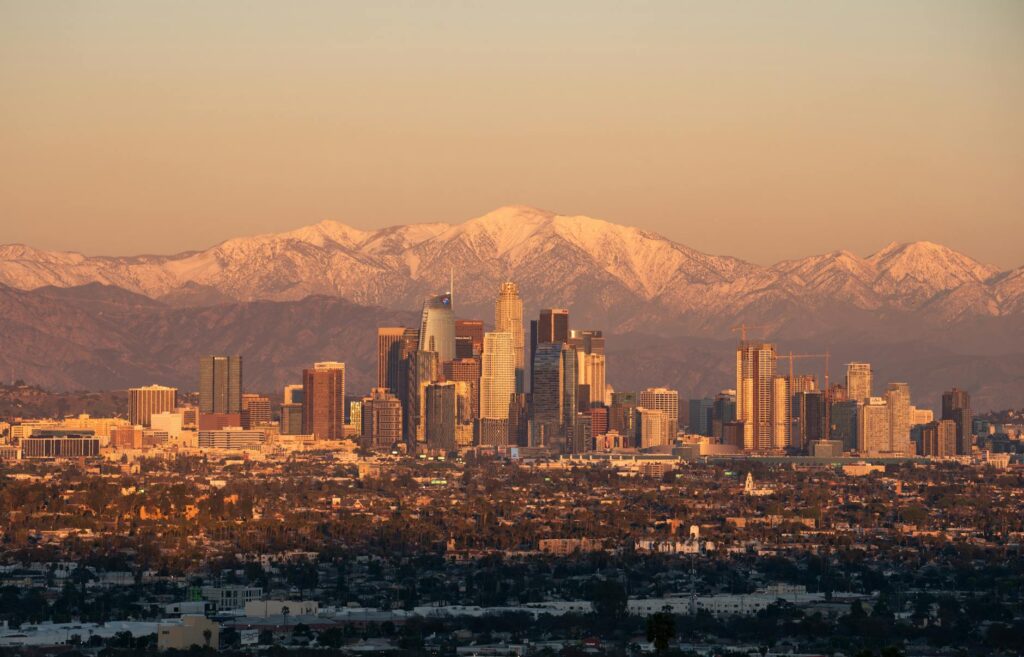
When you see a phone number prefixed with area code 213, it immediately conjures images of the bustling heart of Los Angeles. This isn’t just any California area code. It’s one of the original 86 North American area codes established in 1947 by the North American Numbering Plan (NANP). Originally, it served the vast expanse of Los Angeles County, a territory that has since been carved up by numerous other codes. Today, 213 remains a vital part of the Los Angeles telecommunications landscape, primarily serving Downtown Los Angeles and adjacent central city areas.
Last updated: April 26, 2026
For those outside the United States, understanding U.S. area codes can seem complex. Think of them like historical postal districts or ancient city walls – they tell a story about a region’s development, population density, and expansion. The 213 area code is especially significant because it represents the very genesis of telephone numbering in one of the world’s most dynamic and iconic cities.
Latest Update (April 2026)
As of April 2026, the telecommunications landscape around Los Angeles continues its rapid evolution. Recent developments highlight the strategic introduction of new area codes to manage number exhaustion in the region, a persistent challenge in such a densely populated area. Reports from late 2024 and early 2025 indicated the anticipated arrival of area code 738, designed to serve portions of Los Angeles County. As NBC Los Angeles reported in September 2024, this addition aims to alleviate pressure on established codes, including 213 and 323. FOX 11 Los Angeles confirmed a projected debut date for this new code in September 2024, underscoring the ongoing demand for telecommunication resources in Southern California. The California Public Utilities Commission (CPUC) continues its oversight of these critical transitions, working to ensure adequate numbering resources for both residents and businesses across the metropolitan area.
Further analysis in early 2026 by industry observers suggests that the demand for new numbers may necessitate additional overlay codes in the coming years. This reflects not only population growth but also the proliferation of connected devices and the increasing reliance on multiple phone numbers for personal and professional use. The CPUC’s long-term numbering resource planning remains a key focus to prevent future shortages.
What Does Area Code 213 Mean Today?
The 213 area code primarily serves Downtown Los Angeles (DTLA) and its immediate, vibrant surroundings. This includes culturally rich neighborhoods such as Echo Park, Silver Lake, and Koreatown. It currently functions as an overlay code, meaning it shares its geographic territory with other area codes, most notably 323 and newer additions like 737, as well as the recently launched 738. This overlay system is a strategic necessity, allowing for an increased supply of available phone numbers without requiring existing users to change their numbers – a critical requirement for a sprawling metropolitan area like Los Angeles. Essentially, if you are receiving a call from or looking to assign a number within this central LA zone, 213 is a prime identifier. It signifies a strong connection to the historical and current commercial, cultural, and governmental hub of the city.
The overlay approach, while complex, is the most effective method for extending the life of existing area codes. It ensures that businesses and residents can obtain new numbers as needed. The CPUC mandates that telecommunication providers offer number portability, allowing consumers to keep their existing numbers even if new area codes are introduced in their vicinity.
A Brief History of Area Code 213
Established in 1947 as one of the North American Numbering Plan’s foundational codes, the original 213 area code covered an immense territory. Los Angeles County, at that time, was a single numbering plan area. As the population exploded and the demand for more phone lines grew exponentially, the 213 area code began to be systematically divided. The first major split occurred in 1984 when area code 818 was created to serve the San Fernando Valley and surrounding northern areas. Further divisions followed, most notably the creation of 310 in 1991 for the Westside and South Bay regions, and then 323 in 1998. The 323 code took over a significant portion of the original 213 territory within central Los Angeles. This process, known as ‘geographic splitting,’ was designed to relieve the exhaustion of available prefixes within the original 213 footprint.
However, demand continued unabated, leading to the implementation of ‘overlay’ area codes. In 2006, area code 737 was introduced as an overlay for 213 and 323, ensuring a continued supply of numbers. According to The Los Angeles Times, in March 2024, the historical significance of 213 as L.A.’s very first area code was explored, highlighting its deep roots in the city’s development. As reported by ABC7 Los Angeles in February 2024, parts of Los Angeles County are indeed receiving the new 738 area code, a testament to the ongoing need for number expansion. The introduction of overlays like 737 and the planned 738 demonstrates the NANP’s adaptive strategy to manage number resources in high-demand regions.
Why 213 Still Matters: Business and Local Presence in 2026
For businesses operating in or targeting the Los Angeles market in 2026, the 213 area code continues to hold significant strategic value. It remains deeply associated with the city’s core business district, including its prominent finance, fashion, and entertainment sectors. Possessing a 213 number can lend an air of authenticity, established credibility, and a strong local connection to a company operating within or targeting the central Los Angeles market. From a telecommunications perspective, while 213 is part of an overlay system, it still provides a direct and recognizable link to the central city. For companies headquartered in Downtown LA, securing a 213 number is often a primary objective, especially for startups or businesses aiming to project an image of being at the epicenter of commerce and innovation.
The perception of local presence is incredibly important. A study by Pew Research Center in 2017 highlighted how consumers frequently prefer interacting with businesses that exhibit a local connection, even in our increasingly globalized digital world. An area code like 213 reinforces that vital connection for Angelenos. According to independent analyses of consumer behavior in major metropolitan areas, businesses with area codes directly associated with their primary service zones often experience higher engagement rates. This psychological association with a specific geographic location can build trust and encourage initial contact.
and, in 2026, the digital marketing landscape increasingly emphasizes local SEO (Search Engine Optimization). Having a local area code like 213 can positively influence search engine rankings for local searches. When potential customers search for services within Downtown LA or surrounding neighborhoods, a 213 number can make a business appear more relevant and accessible.
Understanding Area Code Overlays
Area code overlays are a common solution to number exhaustion in high-demand regions. Unlike geographic splits, which divide an existing area code’s territory, overlays add a new area code that serves the same geographic region. This means that customers within the same geographic area may have different area codes. For example, a resident in Downtown Los Angeles might have a 213 number, while their neighbor could have a 323 or even a 737 number. This system requires all callers to dial the full 10-digit number (area code + local number) for every call, including local ones, to ensure the call is routed correctly.
The North American Numbering manags the implementation of overlays Plan Administrator (NANPA) in coordination with state public utility commissions. Their goal is to extend the available supply of telephone numbers as efficiently as possible while minimizing disruption to consumers and businesses. While overlays can initially cause confusion, they are generally accepted as a necessary measure to maintain telecommunication services in rapidly growing areas like Los Angeles.
The Future of Area Code 213
As Los Angeles continues to grow and evolve, the demand for telephone numbers shows no signs of slowing. The 213 area code, despite its age and the introduction of numerous other codes, is likely to remain a significant identifier for the city’s core. The overlay system ensures its continued relevance. Experts predict that as the population expands and the number of connected devices per person increases, further overlays or even entirely new numbering plan areas might be necessary in the coming decades. The CPUC and NANPA will continue to monitor number utilization rates and implement solutions as needed.
The historical significance of 213 ensures it will likely always hold a special place in the telecommunications history of Los Angeles. It represents the very beginning of telephone service in the region and continues to serve as a direct link to the city’s vibrant downtown core. Its longevity is a testament to the strategic planning and adaptability of the NANP system.
Frequently Asked Questions
What is the geographic area for area code 213?
Area code 213 primarily serves Downtown Los Angeles and adjacent central city areas. It’s an overlay code, sharing its geographic territory with other area codes such as 323, 737, and the newly introduced 738.
Is area code 213 a toll-free number?
No, area code 213 is not a toll-free number. Toll-free numbers typically begin with area codes like 800, 888, 877, 866, 855, 844, or 833.
Does area code 213 cover the entire Los Angeles area?
No, area code 213 covers only the central part of Los Angeles, specifically Downtown LA and nearby neighborhoods. Numerous other area codes servs other parts of Los Angeles County, including 310, 323, 424, 626, 818, and others.
Are there any new area codes being introduced in the 213 region?
Yes, as of April 2026, area code 738 was introduced to serve parts of Los Angeles County, acting as an overlay to existing codes like 213 and 323 to manage number exhaustion. Further introductions of overlay codes are anticipated as demand continues.
What does it mean if I get a call from area code 213?
If you receive a call from area code 213, it likely means the caller is located in or is trying to reach someone in the central part of Los Angeles, primarily Downtown LA and its immediate surroundings. Due to the overlay system, you should always dial the full 10-digit number when calling numbers within this region.
Conclusion
Area code 213 stands as a historical marker in the telecommunications evolution of Los Angeles. Established in 1947, it has witnessed and adapted to the city’s explosive growth, transforming from a single code covering a vast county to a central overlay code serving Downtown LA and its core neighborhoods. In 2026, it continues to represent a vital connection to the city’s commercial and cultural heart. The ongoing implementation of overlay codes, such as the recent addition of 738, ensures that the demand for telephone numbers in this dynamic region is met, preserving the relevance of foundational codes like 213 for years to come.
Source: Britannica
Editorial Note: This article was researched and written by the Serlig editorial team. We fact-check our content and update it regularly. For questions or corrections, contact us.


