Understanding ICL: Your Comprehensive Guide
When you think about improving your vision, what comes to mind? For many, it’s glasses or contact lenses. But what if there was a way to achieve sharp, clear vision without the daily hassle? Enter ICL, or Implantable Collamer Lens surgery. It’s a sophisticated refractive surgery that’s gaining traction as a fantastic alternative for those who aren’t ideal candidates for LASIK or PRK, or simply want a different approach.
I’ve spent years exploring different vision correction methods, and ICL consistently stands out for its unique benefits. It’s not just about ditching your specs; it’s about a potential for exceptionally crisp vision and a lifestyle upgrade. But like any medical procedure, understanding the nuances is key. This guide will walk you through everything you need to know about ICL, from what it is to whether it might be the right choice for you.
Table of Contents
- What Exactly is ICL Surgery?
- How Does ICL Work to Correct Vision?
- ICL vs. LASIK: Key Differences You Need to Know
- The Compelling Benefits of Choosing ICL
- Understanding the Potential Risks and Side Effects of ICL
- Who is a Good Candidate for ICL Surgery?
- What to Expect During the ICL Procedure
- Recovering After ICL Surgery
- Real-World ICL Outcomes and Patient Satisfaction
- Making the Final Decision: Is ICL Right for You?
What Exactly is ICL Surgery?
At its core, ICL surgery involves implanting a thin, flexible lens inside your eye, behind the iris (the colored part) and in front of your natural lens. This lens, made of a biocompatible material called Collamer, works with your eye to correct refractive errors like myopia (nearsightedness), hyperopia (farsightedness), and astigmatism. Unlike LASIK, which reshapes the cornea, ICL adds a corrective lens without removing or altering any corneal tissue.
Think of it like adding a high-precision contact lens *inside* your eye. This lens is permanent, meaning it’s designed to stay in place for life, offering a stable and effective way to achieve clear vision. It’s a marvel of modern ophthalmology, providing a solution for individuals whose vision needs go beyond what traditional laser surgery can offer.
How Does ICL Work to Correct Vision?
The magic of ICL lies in its additive approach. When light enters your eye, it’s refracted (bent) by the cornea and the natural lens to focus on the retina at the back of the eye. If you have a refractive error, this light doesn’t focus precisely on the retina, leading to blurry vision. The ICL lens is custom-designed based on your unique eye measurements to precisely redirect the light.
By adding this precisely calculated lens, the ICL effectively ‘corrects’ the path of light, ensuring it focuses perfectly on your retina. This results in significantly improved visual acuity. The Collamer material is key; it’s soft, flexible, and contains a bit of collagen, making it highly compatible with your eye’s internal environment. This reduces the risk of rejection and inflammation.
ICL vs. LASIK: Key Differences You Need to Know
This is where many people get confused, and it’s crucial to understand the distinctions. LASIK (Laser-Assisted In Situ Keratomileusis) works by using a laser to carefully reshape the cornea, the eye’s clear front surface. ICL, on the other hand, involves implanting a lens *within* the eye.
Here’s a quick rundown:
| Feature | ICL (Implantable Collamer Lens) | LASIK |
|---|---|---|
| Procedure Type | Lens implantation inside the eye | Corneal reshaping with a laser |
| Tissue Altered | None (adds a lens) | Corneal tissue is removed |
| Best For | High myopia, thin corneas, dry eyes, significant astigmatism | Mild to moderate myopia, astigmatism, good corneal thickness |
| Reversibility | Lens can be removed (though typically not necessary) | Permanent corneal change |
| UV Protection | Lens material offers UV protection | No inherent UV protection |
| Night Vision Halos/Glare | Generally lower incidence compared to LASIK for high prescriptions | Can be a concern for some, especially at night |
For individuals with very high prescriptions or thin corneas, ICL often presents a safer and more effective option because it doesn’t require reshaping the cornea. Also, the additive nature of ICL means it can sometimes offer superior visual quality, particularly in low light conditions, compared to LASIK for certain candidates.
The Compelling Benefits of Choosing ICL
Why is ICL becoming such a popular choice? The advantages are significant and address many concerns people have about vision correction.
- Exceptional Visual Quality: Many patients report sharper, clearer vision with ICL than they ever had with glasses or contacts. The contrast and color perception can be remarkably enhanced.
- Treats a Wide Range of Vision Problems: ICL is highly effective for moderate to very high myopia, astigmatism, and even hyperopia, often treating prescriptions that are too severe for LASIK.
- Preserves Corneal Tissue: Unlike LASIK, ICL doesn’t involve removing or ablating corneal tissue. This is a major advantage for those with thin corneas or specific corneal conditions.
- Excellent for Dry Eyes: Because ICL doesn’t impact tear production or corneal nerves like LASIK can, it’s often a better choice for individuals who suffer from dry eyes.
- UV Protection: The Collamer material in the ICL lens has built-in UV protection, which can help safeguard your eyes from harmful ultraviolet rays over time.
- Potential for Reversibility: While designed to be permanent, the ICL lens can be surgically removed if necessary, though this is rarely required. This offers peace of mind.
- No Side Effects Associated with LASIK Flaps: ICL surgery does not create a corneal flap, eliminating the risk of flap-related complications seen in LASIK.
Understanding the Potential Risks and Side Effects of ICL
No surgical procedure is without potential risks, and ICL is no exception. While generally considered very safe, it’s important to be aware of possible complications. My experience has shown that thorough pre-operative screening significantly minimizes these risks.
Potential risks include:
- Increased Eye Pressure: In some cases, the ICL can cause a temporary or persistent increase in intraocular pressure, which needs monitoring and management.
- Inflammation or Infection: As with any eye surgery, there’s a small risk of infection or inflammation inside the eye. Strict adherence to post-operative care is vital.
- Cataract Formation: Although rare, particularly with newer lens designs and proper placement, there’s a theoretical risk of the ICL coming into contact with the natural lens and potentially accelerating cataract formation over many years.
- Reduced Contrast Sensitivity or Glare: Some individuals might experience temporary or persistent issues with glare or reduced contrast sensitivity, especially in low-light conditions.
- Endothelial Cell Loss: The endothelium is the vital inner layer of the cornea. While rare, there’s a potential for cell loss, which is why careful patient selection and surgical technique are paramount.
The good news is that the vast majority of ICL patients experience excellent outcomes with minimal or no complications. The key lies in choosing an experienced surgeon and undergoing comprehensive pre-operative testing.
Who is a Good Candidate for ICL Surgery?
Determining if you’re a good candidate for ICL involves a thorough eye examination. Generally, ideal candidates are:
- Individuals aged 21-60 (though age limits can vary).
- Those with moderate to very high myopia (nearsightedness), hyperopia (farsightedness), or astigmatism.
- People who are not suitable candidates for LASIK or PRK due to thin corneas, dry eyes, or high prescriptions.
- Individuals with stable vision for at least one year.
- Those seeking correction for refractive errors not adequately addressed by other procedures.
- People with healthy eyes, free from conditions like glaucoma, uncontrolled diabetes, or significant corneal abnormalities.
During your consultation, your surgeon will measure your eye’s internal dimensions, check your corneal health, assess your tear film, and evaluate your overall eye health to determine if ICL is the best and safest option for you.
What to Expect During the ICL Procedure
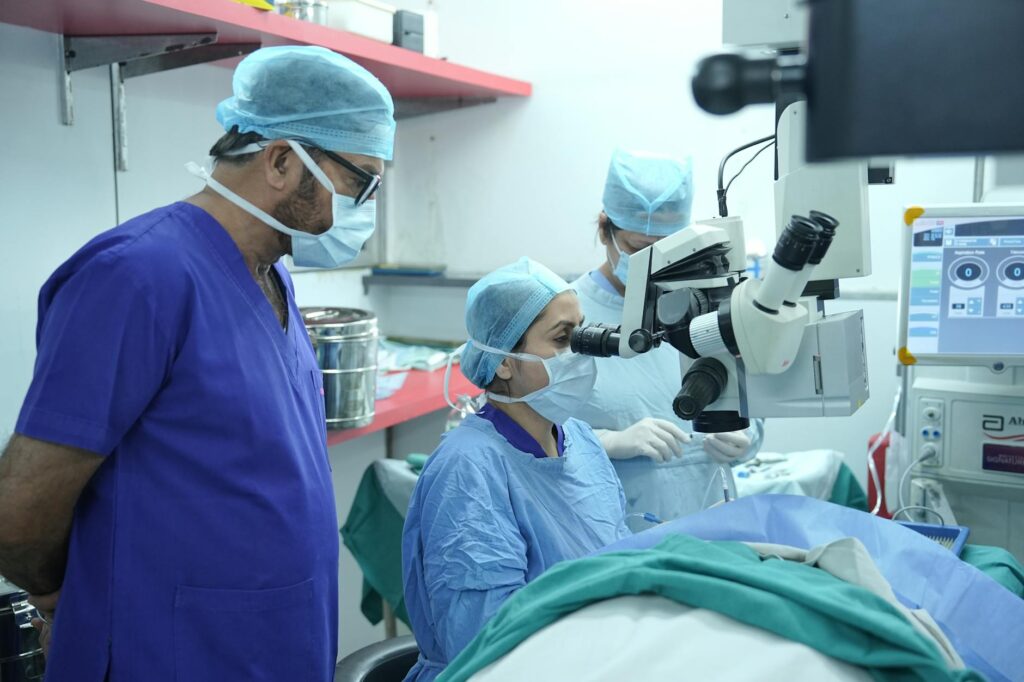
The ICL procedure itself is remarkably quick, often taking only about 20-30 minutes per eye. It’s typically performed on an outpatient basis, meaning you go home the same day.
- Anesthesia: Your eyes will be numbed with anesthetic eye drops. You might also receive a mild sedative to help you relax.
- Incision: The surgeon will make a tiny incision (or two) in the cornea. This incision is so small it usually heals on its own without stitches.
- Lens Insertion: The ICL lens is carefully folded and inserted through the small incision. Once inside, it unfurls into its correct position.
- Positioning: The surgeon uses specialized instruments to gently tuck the lens into place behind the iris and in front of the natural lens.
- Completion: The process is repeated for the other eye, often on the same day or scheduled for a few days later.
You’ll likely feel minimal discomfort during the procedure. The focus is on precision and gentle handling of the eye’s delicate structures.
Recovering After ICL Surgery
Recovery is generally straightforward, but it requires diligence. You’ll receive specific post-operative instructions from your surgeon, which are crucial to follow.
- First Day: You’ll likely experience some blurry vision, light sensitivity, and mild discomfort. You’ll need someone to drive you home. Avoid rubbing your eyes.
- First Week: Vision typically improves significantly within a few days. You’ll use prescribed antibiotic and anti-inflammatory eye drops to prevent infection and manage inflammation. Follow-up appointments are usually scheduled on day 1, day 7, and then at longer intervals.
- Weeks Following: Most patients can return to normal daily activities within a few days to a week. Strenuous exercise and water-related activities (swimming, hot tubs) are usually restricted for a few weeks.
It’s essential to attend all follow-up appointments so your surgeon can monitor your healing, check your vision, and ensure your eye pressure is stable. I recall a patient who was eager to return to running but experienced slight irritation when they resumed too quickly; sticking to the surgeon’s timeline for activity is key.
Real-World ICL Outcomes and Patient Satisfaction
Patient satisfaction rates for ICL surgery are exceptionally high, often exceeding 95%. Studies consistently show that the majority of patients achieve 20/20 vision or better after ICL implantation. For instance, a significant study published in the Journal of Cataract & Refractive Surgery reported excellent visual outcomes and a low rate of complications among patients treated with ICL for high myopia.
“The Visian ICL has been shown to provide excellent visual outcomes, with over 95% of patients achieving 20/20 vision or better, and a high level of patient satisfaction,” according to a review by the American Academy of Ophthalmology.
Many individuals who have had ICL surgery report a profound improvement in their quality of life. They can participate in activities they previously couldn’t, such as swimming or playing sports without worrying about glasses or contacts, and experience a newfound freedom from visual correction.
Making the Final Decision: Is ICL Right for You?
Deciding on any vision correction surgery is a significant personal choice. ICL offers a remarkable path to clear vision for many, particularly those who aren’t ideal LASIK candidates. The procedure’s ability to correct severe refractive errors, its preservation of corneal tissue, and the potential for superior visual quality are compelling advantages.
However, it’s vital to weigh these benefits against the potential risks and understand the recovery process. The most crucial step is a comprehensive consultation with an experienced refractive surgeon. They will assess your eyes, discuss your vision goals, and provide personalized recommendations.
I’ve seen firsthand how life-changing clear vision can be. If you’re tired of the limitations imposed by glasses or contacts, and if your eye health profile aligns with the requirements, exploring ICL could be a pivotal step towards achieving the visual freedom you desire. Remember, knowledge is power when making health decisions, so ask questions, do your research, and trust your eye care professional.
Frequently Asked Questions about ICL
What is the main difference between ICL and LASIK?
ICL involves implanting a flexible lens inside the eye, behind the iris, while LASIK reshapes the cornea using a laser. ICL preserves corneal tissue and is often better for high prescriptions or thin corneas, whereas LASIK permanently alters the cornea.
Is ICL surgery painful?
No, ICL surgery is not typically painful. Local anesthetic eye drops are used to numb the eye, and mild sedatives can help you relax. Most patients report feeling minimal discomfort during the procedure.
How long does vision correction with ICL last?
The ICL is designed to be a permanent vision correction solution. The lens is intended to stay in your eye for life, providing sustained visual clarity without the need for future lens replacement in most cases.
Can ICL correct astigmatism?
Yes, special versions of the ICL, known as toric ICLs, are available to correct astigmatism along with myopia or hyperopia. These lenses have different powers in different meridians to address the irregular shape of the eye.
What are the long-term risks of ICL?
Long-term risks are generally low but can include increased eye pressure or, rarely, cataract formation over many years. Careful patient selection and surgical technique minimize these possibilities, and regular eye exams are important.
Last updated: April 2026