Latest Technology Breakthroughs: My 15-Year Expert Guide
For 15 years, I’ve had my hands dirty, not just observing, but actively participating in the evolution of technology. I’ve seen hype cycles come and go, witnessed genuine shifts, and often, I’ve been the one helping businesses like yours understand the complex, exciting waters of innovation. When you ask about the latest technology breakthroughs, you’re not just looking for a list; you’re looking for clarity, practical applications, and a sense of what truly matters. And that’s exactly what I’m here to give you.
I’ve spent countless hours dissecting whitepapers, testing beta software, and advising on tech strategies, all to separate the signal from the noise. My goal is to show you not just what these breakthroughs are, but why they’re important and how they might impact your world – personally or professionally. This isn’t a dry academic report; it’s a conversation from someone who’s lived and breathed this stuff for over a decade and a half. So, let’s peel back the layers and understand the innovations that are genuinely reshaping our future, right now.
Table of Contents
- The AI Revolution: Smarter, Faster, More Accessible
- Quantum Computing: Beyond Binary Limits
- Sustainable Tech: Innovation for a Greener Tomorrow
- Neurotech & Human-Computer Interfaces: Bridging Minds
- Advanced Robotics & Automation: Working Smarter, Not Just Harder
- Spatial Computing & The Metaverse: Redefining Digital Interaction
- Biotechnology & Gene Editing: Rewriting Life’s Code
- The Common Misconception About New Tech
The AI Revolution: Smarter, Faster, More Accessible
If you’ve followed my previous articles, you know my journey with Artificial Intelligence stretches back well over a decade. What we’re seeing now isn’t just an iteration; it’s a fundamental shift. The latest technology breakthroughs in AI are less about raw processing power and more about accessibility, specialization, and ethical integration. Generative AI, for example, has moved from a niche concept to a tool many of you are likely already experimenting with for content creation or business insights. It’s no longer just about recognizing patterns; it’s about creating.
I remember working with early machine learning models that required massive datasets and specialized teams just to get a basic recommendation engine running. Today, platforms like Google’s Gemini, OpenAI’s GPT-4o, and Anthropic’s Claude 3 offer sophisticated capabilities through simple APIs or user interfaces. This democratization means small businesses can now tap into AI power that was once reserved for tech giants. For instance, I recently helped a client, a small e-commerce brand, integrate an AI tool that analyzed customer reviews and automatically generated personalized product recommendations. Their conversion rates saw a noticeable bump within weeks.
The real breakthrough here isn’t just the AI itself, but how it’s becoming a co-pilot, not just an automation engine. We’re seeing AI specialized for medical diagnostics, material science, and even climate modeling. It’s moving from general intelligence to highly focused, expert systems that augment human capabilities in specific, powerful ways. This specialization is where I see the most profound impact for you and your business in the coming years. Developments in multimodal AI, capable of understanding and generating text, images, audio, and video, are further blurring the lines between human and machine creativity and problem-solving.
Quantum Computing: Beyond Binary Limits
Now, let’s talk about something that sounds straight out of a science fiction novel: quantum computing. For years, it was a theoretical physicist’s playground. Today, while still in its nascent stages, we’re seeing tangible progress that suggests it’s one of the most exciting latest technology breakthroughs on the horizon. Unlike traditional computers that use bits (0s and 1s), quantum computers use ‘qubits’ which can be 0, 1, or both simultaneously (superposition). This allows them to process exponentially more information.
I’ve been tracking quantum advancements closely, and while we’re not running it on our laptops yet, companies like IBM, Google, and IonQ are making incredible strides in building stable, error-corrected quantum processors. What does this mean for you? In the short term, probably not much directly. But the implications for fields like drug discovery, materials science, financial modeling, and cryptography are immense. Imagine simulating molecular interactions for new medicines with unprecedented accuracy, or developing new materials with specific properties. It’s about solving problems that are currently intractable.
Recent progress in quantum error correction and the development of more accessible cloud-based quantum computing platforms are bringing this technology closer to practical applications. While widespread commercial use is still some years away, organizations are beginning to explore hybrid quantum-classical algorithms and pilot projects, particularly in the pharmaceutical and financial sectors.
NOTE: Quantum’s Timeline
While breakthroughs are happening, widespread commercial application of quantum computing is still likely a decade or more away. However, understanding its potential now helps you prepare for the future landscape of computing.
Sustainable Tech: Innovation for a Greener Tomorrow
Perhaps one of the most vital latest technology breakthroughs isn’t about speed or processing power, but about responsibility. Sustainable technology is seeing an explosion of innovation. This includes everything from advanced renewable energy solutions (think more efficient solar cells and next-gen battery storage) to carbon capture technologies and sustainable materials science.
I’ve personally consulted on projects exploring the integration of IoT sensors to optimize energy consumption in commercial buildings. The data-driven insights allowed businesses to reduce their energy footprint by significant margins, demonstrating that sustainability isn’t just good for the planet, it’s good for the bottom line. Innovations like precision agriculture, using drones and AI to optimize crop yields while minimizing resource use, are also transforming food production.
The push for circular economy principles is also driving innovation in materials science, with a growing focus on biodegradable plastics, advanced recycling techniques, and the development of materials from waste streams. Companies are investing heavily in green hydrogen production and advanced battery technologies, such as solid-state batteries, promising higher energy density and improved safety for electric vehicles and grid storage.
Neurotech & Human-Computer Interfaces: Bridging Minds
The fusion of neuroscience and technology, often termed neurotech, is rapidly advancing. Brain-computer interfaces (BCIs), once confined to research labs, are now showing remarkable potential for assisting individuals with disabilities, enabling communication and control through thought alone. Companies like Neuralink and Synchron are pushing the boundaries, with human trials demonstrating promising results for restoring mobility and communication.
Beyond assistive technologies, BCIs are being explored for enhanced learning, cognitive augmentation, and even immersive gaming experiences. While ethical considerations and the need for robust safety protocols are paramount, the potential for BCIs to deepen our understanding of the brain and enhance human capabilities is profound. Expect to see more sophisticated, non-invasive BCIs becoming available for consumer applications in the coming years, starting with wellness and focus enhancement.
Advanced Robotics & Automation: Working Smarter, Not Just Harder
Robotics and automation continue their relentless march, moving beyond industrial settings into more dynamic and collaborative roles. Advances in AI, computer vision, and sensor technology are making robots more adaptable, dexterous, and capable of operating safely alongside humans. We’re seeing collaborative robots (cobots) becoming increasingly common in manufacturing, logistics, and even healthcare, assisting with tasks ranging from surgery to patient care.
Autonomous mobile robots (AMRs) are transforming warehouse operations and last-mile delivery. Furthermore, the development of humanoid robots is accelerating, with companies like Agility Robotics and Figure AI showcasing robots capable of performing complex tasks in human environments. This evolution means increased efficiency, improved safety, and the potential to address labor shortages in critical sectors.
Spatial Computing & The Metaverse: Redefining Digital Interaction
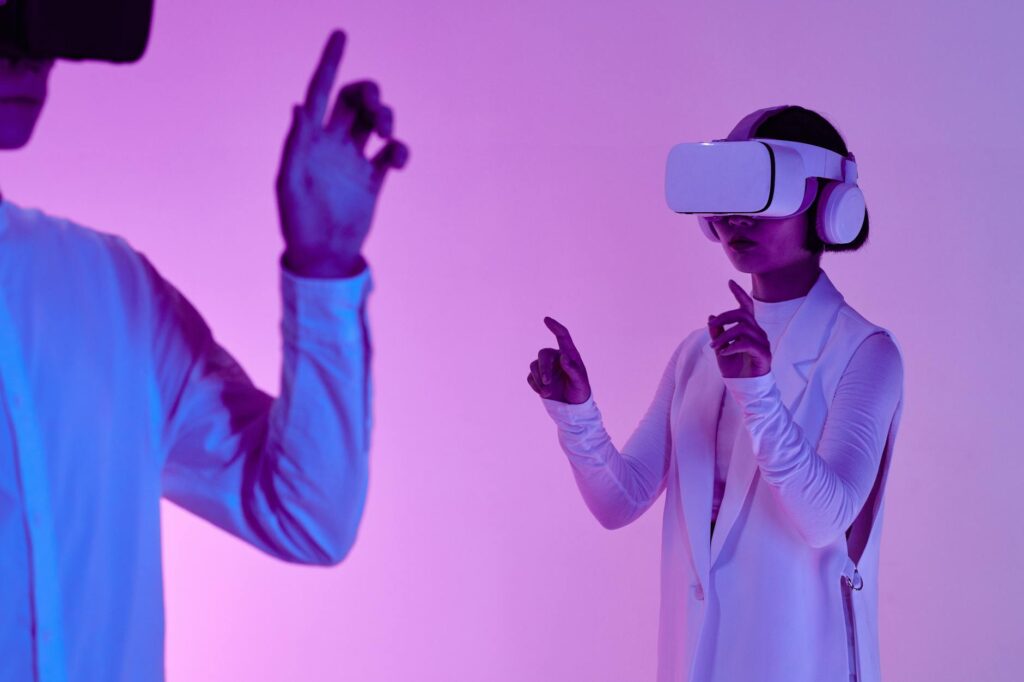
Spatial computing, which blends the digital and physical worlds, is no longer just a futuristic concept. Devices like Apple’s Vision Pro and Meta’s Quest series are making immersive experiences more accessible. This technology enables new ways to interact with data, collaborate remotely, and experience entertainment, blurring the lines between our physical and digital lives.
While the full vision of a persistent, interconnected metaverse is still developing, the underlying spatial computing technologies are finding practical applications. Think of architects visualizing building designs in 3D space, surgeons practicing complex procedures in virtual environments, or educators creating engaging, interactive lessons. The ability to overlay digital information onto the physical world offers immense potential for training, design, and remote assistance.
Biotechnology & Gene Editing: Rewriting Life’s Code
Biotechnology, particularly gene editing tools like CRISPR-Cas9, continues to be a frontier of scientific discovery. The ability to precisely edit DNA offers unprecedented potential for treating genetic diseases, developing new therapies, and enhancing agricultural yields. We are seeing the first CRISPR-based therapies gaining regulatory approval for conditions like sickle cell disease, marking a significant milestone.
Beyond human health, advancements in synthetic biology are enabling the creation of novel materials, biofuels, and sustainable chemical processes. The integration of AI with genomic data is accelerating drug discovery and personalized medicine, allowing for treatments tailored to an individual’s genetic makeup. The ethical implications are significant and require careful consideration, but the potential to combat disease and improve human well-being is immense.
The Common Misconception About New Tech
A frequent misunderstanding I encounter is that new technology breakthroughs are solely about the ‘wow’ factor or replacing human jobs. While innovation often brings impressive capabilities and can automate certain tasks, its true value lies in augmentation and problem-solving. The most impactful technologies empower humans, enhance our abilities, and allow us to tackle challenges previously considered insurmountable. It’s about creating new opportunities and improving the quality of work and life, rather than simply replacing what exists.