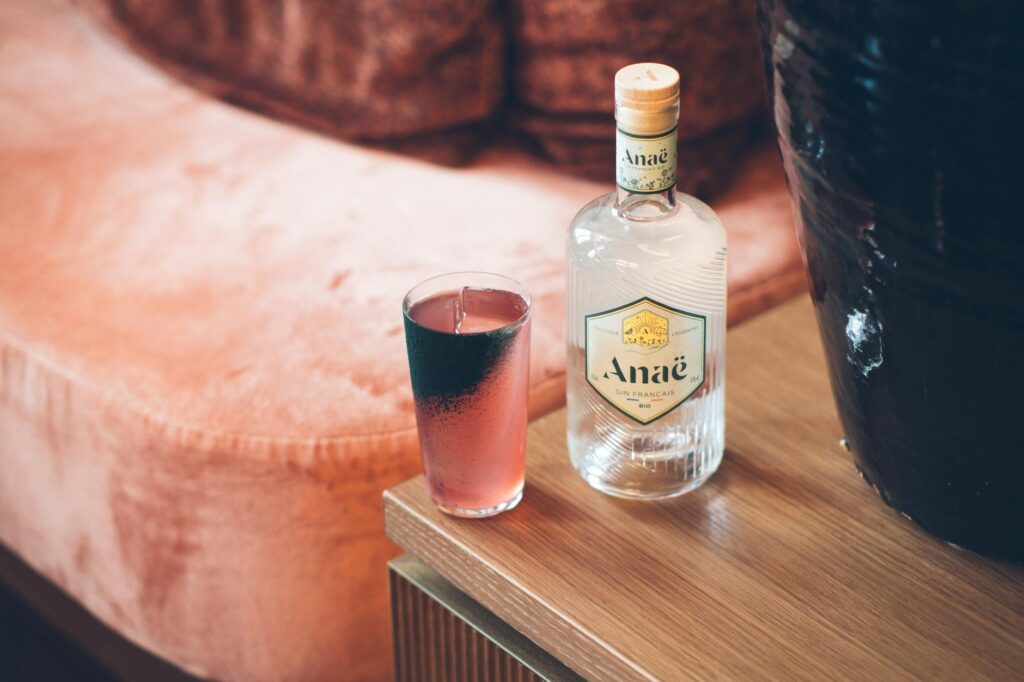
Have you ever stumbled across a foreign word online and felt completely stumped? If you’ve seen the word ‘giniä’, you might be wondering if it’s a typo or a new slang term. The answer is much more interesting. Giniä is the Finnish word for ‘gin,’ specifically when referring to an unspecified amount of it. This form, known as the partitive case, is essential for speaking Finnish correctly, especially when you’re at a bar in Helsinki.
What Is the Direct Translation of Giniä?
The direct translation of ‘giniä’ is simply ‘gin’. However, that translation misses the crucial grammatical information the word carries. It’s not just ‘gin’; it’s more accurately translated as ‘some gin’ or ‘any gin’. This distinction is fundamental to the Finnish language and comes from its system of grammatical cases, which change the endings of nouns depending on their role in a sentence.
Think of it this way: in English, we add words like ‘some’ or ‘a piece of’ to show we’re not talking about the whole thing. In Finnish, they often just change the end of the word itself. So, ‘giniä’ signals that you’re talking about a quantity of gin, like the amount in a glass, rather than a specific, whole bottle of gin.
Why Does the Word for Gin Change in Finnish?
The word for gin changes in Finnish because the language relies heavily on a system of 15 grammatical cases. This might sound intimidating, but the concept is simpler than you think. A case is just a modification to a noun that tells you its function in a sentence. English has this too, but in a much simpler form. For example, we say ‘he’ when it’s the subject (‘He went to the store’) but ‘him’ when it’s the object (‘I saw him’).
Finnish takes this much further. The two most common cases for beginners to learn are the nominative and the partitive.
- Nominative (gini): This is the basic, dictionary form of the word. It’s used when the noun is the subject of the sentence or when you’re talking about a whole, countable object.
- Partitive (giniä): This form is used for incomplete actions, unspecified amounts of something that can’t be easily counted (like liquids), and in negative sentences. The ‘-ä’ ending signals this ‘part-of-a-whole’ meaning.
Understanding this difference is the key to unlocking how ‘giniä’ works. You’re not just learning a word; you’re learning a core concept of Finnish grammar. can provide even more context.
[IMAGE alt=”A diagram showing the word ‘gini’ transforming into ‘giniä’ with an arrow.” caption=”In Finnish, noun endings change to show their grammatical role.”]
When Should You Use ‘Gini’ vs. ‘Giniä’?
Knowing when to use the base form ‘gini’ versus the partitive form ‘giniä’ is crucial for clarity. The choice depends entirely on the context of your sentence. Using the wrong one can make your sentence sound unnatural or even change its meaning.
Here is a simple breakdown to help you distinguish between the two:
| Form | Grammatical Case | When to Use | Example Sentence (with translation) |
|---|---|---|---|
| Gini | Nominative | The subject of a sentence; a specific, whole, countable item. | Tämä gini on Suomesta. (This gin is from Finland.) |
| Giniä | Partitive | An unspecified amount of an uncountable noun (like a drink); in negative sentences; with numbers (except one). | Haluaisin lasin giniä. (I would like a glass of gin.) |
| Gini | Nominative | Referring to the concept of gin as a whole. | Gini on suosittu juoma. (Gin is a popular drink.) |
| Giniä | Partitive | When an action is incomplete or ongoing. | Minulla ei ole giniä. (I don’t have any gin.) |
🎬 Related Video
📹 giniä — Watch on YouTube
How Is Giniä Used in a Real Sentence?
Seeing ‘giniä’ in action is the best way to understand its use. The partitive case appears frequently in everyday conversation, especially when ordering food and drinks or talking about quantities. It’s one of the first grammatical forms you’ll encounter when learning Finnish.
Practical Examples:
- Ordering a drink: “Saisinko giniä ja tonicia, kiitos.” (Could I have some gin and tonic, please?) Here, you are asking for an unspecified amount of gin and tonic to be put in your glass.
- Asking about preference: “Juotko sinä giniä?” (Do you drink gin?) This is a general question about whether the person consumes the substance, not about a specific bottle.
- Stating a negative: “Kaapissa ei ole giniä.” (There is no gin in the cupboard.) Negative sentences in Finnish almost always require the object to be in the partitive case.
- Expressing a desire: “Minä haluan giniä.” (I want some gin.) You are expressing a desire for a quantity of gin, not a particular bottle.
Notice how in each case, ‘giniä’ refers to the substance of gin rather than a discrete, countable unit. is a great next step after learning this concept.
What Are Some Famous Finnish Gin Brands?
The rise of craft distilling has put Finland on the global gin map. Understanding the word ‘giniä’ is even more rewarding when you can connect it to the country’s world-class products. These distilleries often use unique local botanicals, creating gins with a distinct Nordic character.
Here are a few notable Finnish entities in the world of gin:
- Kyrö Distillery Company: Perhaps the most famous, their Napue Gin was named the ‘Best Gin for Gin & Tonic’ at the International Wine & Spirit Competition (IWSC) in 2015. It uses local botanicals like meadowsweet and sea buckthorn.
- The Helsinki Distilling Company: Located in the capital, this distillery produces a range of spirits, including a classic dry gin and special editions. They were instrumental in reviving legal distilling in Helsinki after a long hiatus.
- Arctic Blue Gin: This brand is known for its use of wild arctic blueberries (bilberries) from the forests of eastern Finland. Their gin has a smooth, slightly fruity profile that has won numerous international awards.
According to reports from Finland’s national alcoholic beverage retailing monopoly, Alko, the popularity and sales of premium and craft gins saw a remarkable increase over the last decade, highlighting a shift in consumer tastes towards high-quality, local products.
[IMAGE alt=”Three bottles of Finnish gin: Kyrö, Helsinki Distilling Co., and Arctic Blue Gin.” caption=”Finland is home to several award-winning gin distilleries.”]
Understanding the Partitive Case Beyond Giniä
The concept behind ‘giniä’ is not a one-off rule; it is a fundamental part of the Finnish language that applies to countless other nouns. Once you understand why ‘gini’ becomes ‘giniä’, you can apply that same logic to other words, which will dramatically improve your comprehension.
This pattern is especially common with food and drinks:
- Coffee: kahvi (nominative) → kahvia (partitive) – “Haluatko kahvia?” (Do you want some coffee?)
- Milk: maito (nominative) → maitoa (partitive) – “Lapsi juo maitoa.” (The child drinks milk.)
- Water: vesi (nominative) → vettä (partitive) – “Lasissa on vettä.” (There is some water in the glass.)
By learning the rule for ‘giniä’, you’ve actually learned a universal key to understanding Finnish grammar. can help you avoid other cultural and linguistic mix-ups.
Frequently Asked Questions
What language is ‘giniä’?
‘Giniä’ is from the Finnish language (Suomi). It is the partitive case form of the noun ‘gini,’ which means gin. Finnish is a Finno-Ugric language known for its complex grammar system that uses noun cases instead of prepositions to show relationships between words in a sentence.
Is ‘giniä’ the same as a gin and tonic?
No, ‘giniä’ specifically refers to ‘gin’ as a substance. A gin and tonic in Finnish is a ‘gin tonic’ (pronounced similarly to English). To order one, you would say you want ‘giniä ja tonicia’ (‘some gin and some tonic’), as both ingredients are uncountable liquids requiring the partitive case.
How do you pronounce ‘giniä’?
The pronunciation is approximately ‘GIN-i-ae’. The ‘g’ is hard as in ‘go’. The ‘i’ is like the ‘ee’ in ‘see’. The final ‘ä’ is a vowel that doesn’t exist in most English dialects, but it’s similar to the ‘a’ in ‘cat’ or ‘apple’. Each vowel is pronounced distinctly.
Does this rule apply to other drinks in Finnish?
Yes, absolutely. The partitive case is used for nearly all uncountable substances, including drinks. For example, ‘olut’ (beer) becomes ‘olutta’, ‘viini’ (wine) becomes ‘viiniä’, and ‘vesi’ (water) becomes ‘vettä’ when you are referring to an unspecified quantity of them.
Why is Finnish grammar so difficult for English speakers?
Finnish grammar can seem challenging because it is not an Indo-European language, so its structure is very different from English, Spanish, or French. Its reliance on noun cases, vowel harmony, and consonant gradation are concepts that require a different way of thinking about sentence construction for native English speakers.
Your Next Step to Understanding Finnish
You started by asking about a single word, ‘giniä’, and have now uncovered a core principle of the Finnish language. Understanding the partitive case is a huge step forward. It shows how the language builds meaning through word endings rather than word order, a concept that makes Finnish both challenging and beautiful. The next time you see this word, you’ll know it means more than just gin—it means ‘some gin’, and that small difference is everything.