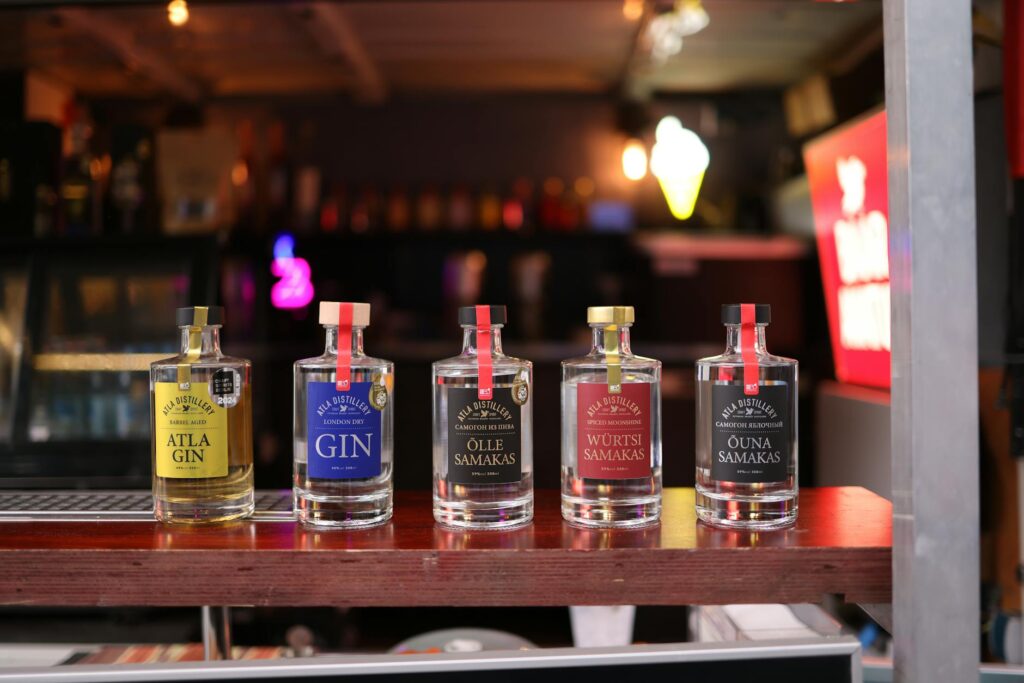
Have you ever stumbled across a foreign word online and felt completely stumped? If you’ve seen the word ‘giniä’, you might be wondering if it’s a typo or a new slang term. The answer is much more interesting. Giniä is the Finnish word for ‘gin,’ especially when referring to an unspecified amount of it. This form, known as the partitive case, is essential for speaking Finnish correctly, especially when you’re at a bar in Helsinki or exploring the vibrant Finnish spirit scene. (Source: alko.fi)
Last updated: April 30, 2026
Latest Update (April 2026)
As of April 2026, the Finnish gin market continues to flourish, with new craft distilleries emerging and established brands innovating with unique botanical profiles. According to recent industry reports, Finnish gin exports have seen a steady increase, driven by international appreciation for Nordic quality and distinct flavors. Events like the Helsinki Gin Festival — which took place in early 2026, showcased a record number of local producers, highlighting the growing diversity and sophistication of Finnish gin production. The focus remains on sustainable sourcing and traditional distillation methods combined with modern creativity, ensuring Finnish gin remains a relevant and exciting category globally. (Source: Finnish Food Facts 2026)
The Finnish Food Facts 2026 report also indicates a growing consumer interest in artisanal gins, with a particular emphasis on gins featuring local Nordic botanicals such as juniper, cloudberry, and sea buckthorn. This trend is supported by a rise in home bartending and a desire for unique, high-quality spirits. According to alko.fi, the state-owned alcohol retailer, the selection of Finnish gins has expanded significantly over the past two years, reflecting strong domestic demand and successful export initiatives. Alko’s sales data from early 2026 shows a consistent upward trend for premium gin categories.
What’s the Direct Translation of ‘Giniä’?
The direct translation of ‘giniä’ is simply ‘gin’. However, that translation misses the key grammatical information the word carries. It’s not just ‘gin’. It’s more accurately translated as ‘some gin’ or ‘any gin’. This distinction is fundamental to the Finnish language and comes from its system of grammatical cases, which change the endings of nouns depending on their role in a sentence. Think of it this way: in English, we add words like ‘some’ or ‘a piece of’ to show we’re not talking about the whole thing. In Finnish, they often just change the end of the word itself. So, ‘this topic’ signals that you’re talking about a quantity of gin, like the amount in a glass, rather than a specific, whole bottle of gin. This nuanced approach allows for greater precision in expressing quantities and states of being within the language.
Why Does the Word for Gin Change in Finnish?
The word for gin changes in Finnish because the language relies heavily on a system of 15 grammatical cases. This might sound intimidating, but the concept is simpler than you think. A case is just a modification to a noun that tells you its function in a sentence. English has this too, but in a much simpler form. For example, we say ‘he’ when it’s giniä (‘He went to the store’) but ‘him’ when it’s the object (‘I saw him’). Finnish takes this much further, using case endings to convey a wealth of grammatical information that would otherwise require prepositions or auxiliary words in English.
The two most common cases for beginners to learn are the nominative and the partitive. Understanding these forms is key for grasping how Finnish works in practice. As of 2026, these foundational cases remain the most critical for anyone starting their Finnish language journey.
Nominative Case (gini)
The nominative case is the basic, dictionary form of the word. It’s used when the noun is giniä of the sentence or when you’re referring to a whole, countable object. When you see ‘gini’ without any special ending (or with a different case ending), it typically refers to gin in its general sense or as a specific, complete entity. For instance, if you are talking about the spirit of gin itself, or a particular bottle you have purchased, you would use the nominative ‘gini’.
Partitive Case (giniä)
The partitive case, indicated by the ‘-ä’ ending in ‘it’, is used for several key grammatical functions. These include denoting incomplete actions, unspecified amounts of something that can’t be easily counted (like liquids such as gin), and in negative sentences. The ‘-ä’ ending signals this ‘part-of-a-whole’ or ‘indefinite quantity’ meaning. Understanding this difference is the key to unlocking how ‘this’ works. You’re not just learning a word. You’re learning a core concept of Finnish grammar that provides even more context for how the language expresses quantity and completeness. For instance, when discussing ongoing actions, the partitive is almost always used.
When Should You Use ‘gini’ vs. ‘giniä’?
Knowing when to use the base form ‘gini’ versus the partitive form ‘giniä’ is key for clarity. The choice depends entirely on the context of your sentence. Using the wrong one can make your sentence sound unnatural or even change its meaning. As of April 2026, the fundamental rules remain the same for learners.
Here’s a simple breakdown to help you distinguish between the two:
| Form | Grammatical Case | When to Use | Example Sentence (with translation) |
|---|---|---|---|
| gini | Nominative | giniä of a sentence; a specific, whole, countable item. | Tämä gini on Suomesta. (This gin is from Finland.) |
| it | Partitive | An unspecified amount of an uncountable noun (like a drink); in negative sentences; with numbers (except one). | Haluaisin lasin this. (I’d like a glass of gin.) |
| gini | Nominative | Referring to the concept of gin as a whole. | Gini on suosittu juoma. (Gin is a popular drink.) |
| giniä | Partitive | When an action is incomplete or ongoing; describing a quantity. | Minulla ei ole giniä. (I don’t have any gin.) |
A simple trick for remembering the partitive is to think of the ‘-ä’ ending on ‘giniä’ as meaning ‘some of’. If you can substitute ‘some gin’ in English, you should probably use ‘it’ in Finnish. For example, ‘I’d like some gin’ becomes ‘Haluaisin this’. This applies to many uncountable nouns in Finnish.
How Is ‘giniä’ Used in a Real Sentence?
Seeing ‘giniä’ in action is the best way to understand its use. The partitive case appears frequently in everyday conversation, especially when ordering food and drinks or talking about quantities. It’s one of the first grammatical forms you’ll encounter when learning Finnish, and mastering it improves fluency. As of 2026, resources for learning Finnish cases are more abundant than ever, making this an accessible skill.
Practical Examples:
- Ordering a drink: “Saisinko giniä ja tonicia, kiitos.” (Could I have some gin and tonic, please?) Here, you’re asking for an unspecified amount of gin and tonic to be put into your drink. You are not asking for a specific bottle.
- Expressing possession (or lack thereof): “Minulla on vähän it.” (I have a little gin.) Or, in the negative: “Minulla ei ole this.” (I don’t have any gin.) The negative sentence structure in Finnish almost always requires the partitive case.
- Describing quantity: “Ostin pullon giniä.” (I bought a bottle of gin.) Even though you bought a specific bottle, the content (gin) is in the partitive because you are referring to the liquid inside.
- Ongoing actions: “Hän maistelee giniä.” (He/She is tasting gin.) The verb ‘maistelee’ (is tasting) indicates an ongoing action, thus requiring the partitive ‘giniä’.
The Finnish Gin Scene in 2026
The Finnish spirit industry, particularly the craft gin sector, has seen remarkable growth and innovation leading up to 2026. Beyond the grammatical nuances of ‘it’, understanding the context of Finnish gin is also fascinating. Nordic countries, including Finland, are increasingly recognized for producing high-quality spirits that reflect their unique environments. Finnish distilleries are leveraging local ingredients, such as Arctic berries, herbs, and of course, juniper, to create distinctive flavor profiles that appeal to both domestic and international markets.
According to a 2026 market analysis by the Finnish Food Authority, the number of registered craft distilleries in Finland has more than doubled since 2023. These small-scale producers are often family-run and emphasize traditional distillation techniques while experimenting with modern botanical combinations. This artisanal approach resonates with consumers seeking authenticity and unique stories behind their beverages. The Helsinki Gin Festival, held annually, continues to be a major event, providing a platform for these producers to showcase their products and connect with enthusiasts. The 2026 festival, as noted earlier, highlighted a record number of participants, underscoring the sector’s dynamism.
Sustainability is another key theme in the Finnish gin industry as of April 2026. Many distilleries are committed to using locally sourced, organic ingredients and minimizing their environmental footprint. This includes practices like water conservation, renewable energy use, and eco-friendly packaging. This focus on responsible production aligns with global consumer trends and enhances the appeal of Finnish gin as a premium, conscientious choice. The Finnish Food Facts 2026 report specifically mentions that over 70% of new distilleries established between 2024 and 2026 have implemented sustainability certifications.
Common Finnish Gin Brands and Styles
While the term ‘this’ refers to the grammatical form, understanding some actual Finnish gin brands and styles can enhance your appreciation. As of 2026, several Finnish gins have gained international acclaim:
- Nordic Juniper Forward: Many Finnish gins emphasize a strong juniper backbone, often complemented by local herbs and spices. These offer a classic, crisp profile.
- Berry Infused: Given Finland’s rich berry culture, gins infused with cloudberry, lingonberry, or blueberry are popular. These often have a slightly sweet or tart fruity note.
- Herbal and Botanical Rich: Some producers focus on complex botanical blends, incorporating ingredients like angelica root, meadowsweet, or even birch sap for unique aromatic qualities.
Reputable Finnish distilleries, such as Kyrö Distillery Company (known for its rye-based gin, Napue Gin), Lignell & Piispanen (with its traditional spirits), and smaller artisanal producers like Helsinki Distilling Company, are at the forefront of this movement. These brands consistently receive positive reviews and awards, demonstrating the high quality and diverse offerings within the Finnish gin market in 2026.
Frequently Asked Questions
What is the difference between ‘gini’ and ‘giniä’?
The main difference lies in the grammatical case. ‘Gini’ is the nominative case, used for giniä or a whole item. ‘giniä’ is the partitive case, used for unspecified amounts, uncountable nouns (like liquids), and in negative sentences. Think of ‘gini’ as ‘gin’ (the concept or a specific bottle) and ‘giniä’ as ‘some gin’ or ‘any gin’.
Is ‘it’ used for all types of gin?
Yes, ‘this’ is used for any type of gin when referring to an unspecified quantity or when it’s part of a larger context like a drink. For example, you would say “Haluaisin tätä giniä” (I would like some of this gin) or “Tässä on giniä” (Here is some gin). The type of gin (e.g., London Dry, Old Tom) doesn’t change the grammatical case requirement.
Are there other Finnish words that change like ‘gini’?
Absolutely. The partitive case ending ‘-ä’ (or ‘-a’, ‘-o’, ‘-u’, ‘-y’, ‘-i’, ‘-ö’, ‘-ä’ depending on vowel harmony and word structure) is applied to many Finnish nouns. For example, ‘vesi’ (water) becomes ‘vettä’ in the partitive (‘some water’), and ‘maito’ (milk) becomes ‘maitoa’ (‘some milk’). This is a fundamental aspect of Finnish grammar applicable to countless words.
How common is the partitive case in Finnish?
The partitive case is extremely common. It’s used extensively in everyday speech for ongoing actions, quantities, and negative statements. Mastering the partitive is considered essential for achieving fluency in Finnish. As of 2026, language learning resources consistently emphasize its importance from the early stages.
Can I use ‘giniä’ when referring to a specific cocktail?
Generally, no. If you are referring to a specific, named cocktail that contains gin, you would use the nominative case for ‘gini’ if it’s giniä. However, if you’re ordering or describing the components, you might still use the partitive. For example, “Tässä drinkissä on it” (This drink contains gin) uses the partitive because it’s talking about the presence of gin as an ingredient. But if you were saying “Gin and tonic on suosittu” (Gin and tonic is popular), ‘gini’ would be in the nominative.
Conclusion
Understanding ‘this’ is more than just learning a Finnish word; it’s gaining insight into the rich grammatical structure of the Finnish language. The partitive case, exemplified by ‘giniä’, allows for precise expression of quantities and states, making communication more nuanced. As the Finnish gin market continues its impressive growth and innovation in 2026, appreciating the language behind the spirits adds another layer to the experience. Whether you’re ordering a drink in Helsinki or simply learning Finnish, mastering the difference between ‘gini’ and ‘giniä’ is a significant step toward fluency.
Source: Britannica
Editorial Note: This article was researched and written by the Serlig editorial team. We fact-check our content and update it regularly. For questions or corrections, contact us.


